Surfaces Leveled Before Foundations and Drainage Install
Land Grading in Austin for cleared properties requiring drainage slopes, building pads, and surface stabilization
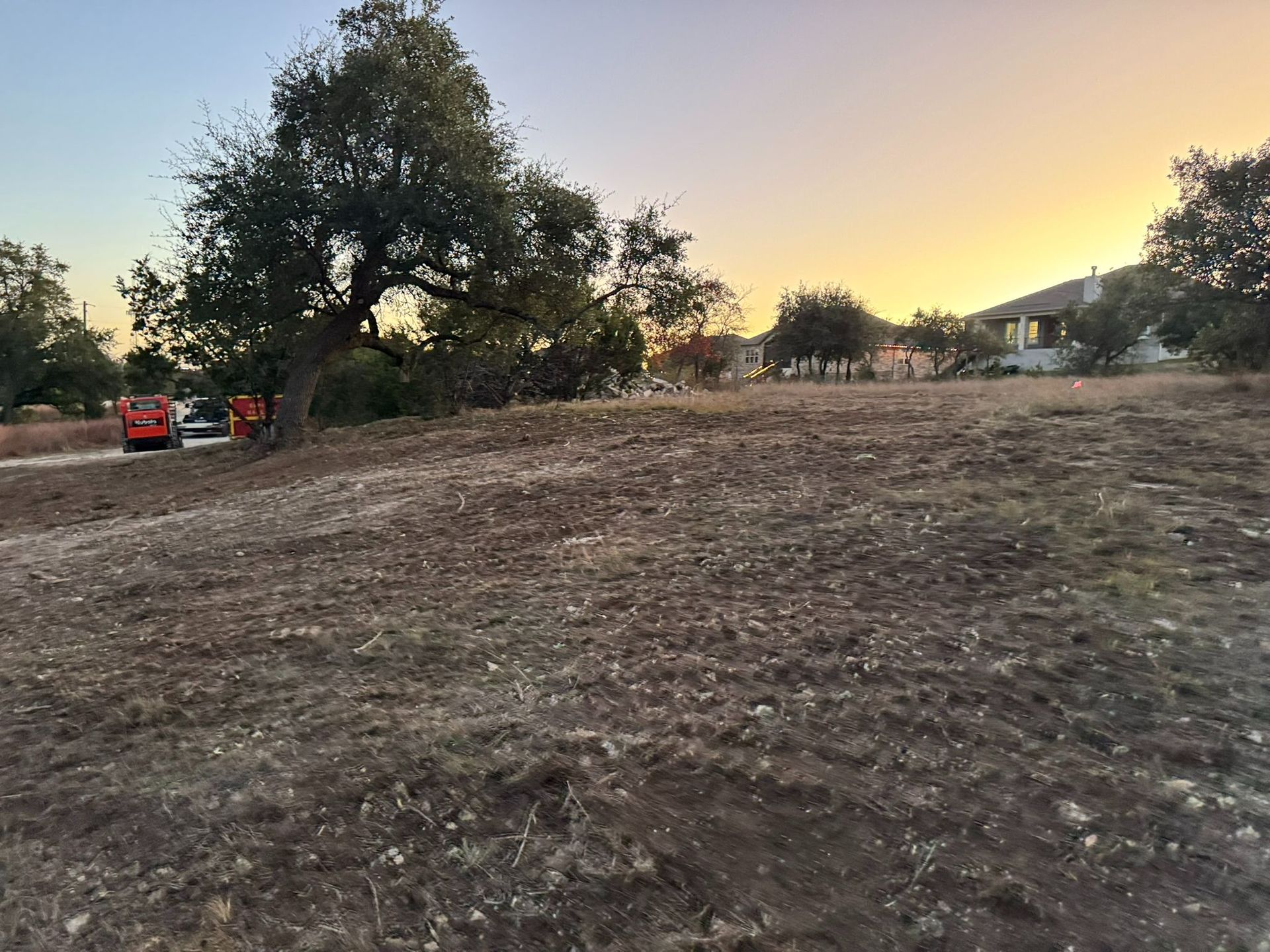
Proper drainage design and foundation preparation depend on graded surfaces that direct water away from structures and create stable building pads. Cut It Out Land Management grades cleared land across Austin, Bastrop, Leander, Liberty Hill, and the hill country using skid steer blade attachments to level, slope, and prepare surfaces after brush clearing and dirt work are complete. Variable elevation across the region requires grading that accounts for natural drainage patterns and soil composition differences between properties.
Grading involves establishing slopes that prevent water pooling, creating level areas for building footprints, and smoothing access routes for construction traffic. The skid steer blade pushes and spreads soil to achieve the required elevations, working in passes to compact and refine the surface. In Bastrop's active construction zone, grade work happens before foundation crews arrive so that building pads meet engineering specifications and drainage flows away from structures as designed.
Arrange a site inspection to review existing elevations and discuss grading requirements based on your intended land use.
What Grading Prevents Long-Term
Grading corrects low spots where water collects, eliminates high points that interfere with construction, and establishes consistent slopes that move stormwater toward drainage features or property boundaries. The blade work happens after clearing removes vegetation, allowing the operator to see the actual ground surface and identify areas that need fill or excavation. Properties with poor natural drainage develop foundation problems, erosion channels, and saturated soil conditions if grading is skipped or done incorrectly.
After grading, the surface will have defined slopes, level building pads, and smooth transitions between elevation changes. Water will flow in predictable directions rather than pooling randomly, and construction equipment can travel across the site without getting stuck in soft or uneven ground. The graded surface provides a stable base for utilities, driveways, and landscaping that follow in later construction phases.
Land grading does not include engineered drainage system installation, soil compaction verification, or final finish grading for landscaping. These steps require specialized equipment or testing and are typically handled by separate trades later in the project timeline.
What Property Owners Usually Ask
Clients preparing land for construction or improving existing properties often need clarity on what grading involves and how it integrates with other site work.
What preparation is needed before grading starts?
The property must be cleared of vegetation, debris, and any obstacles that would interfere with blade work. Utilities should be marked so the operator knows where to avoid heavy equipment pressure that could damage underground lines.
How does grading account for hill country terrain?
The operator evaluates natural drainage patterns and works with existing slopes rather than forcing flat grades that would require excessive fill. In areas with rocky soil or steep elevation changes, grading focuses on stabilizing access routes and building pads while leaving natural drainage corridors intact.
What's the difference between rough grading and finish grading?
Rough grading establishes major slopes and building pads during site preparation, while finish grading refines the surface for landscaping or paving after construction is complete. The service provided here is rough grading integrated with clearing and dirt work phases.
How long does grading take on a residential lot?
A typical single-family lot takes half a day to a full day depending on how much elevation correction is needed and whether fill material must be brought in from other areas of the property. Multi-lot developments require phased grading to coordinate with ongoing construction activity.
When is grading required by local building codes?
In Bastrop and surrounding areas, grading is typically required to establish positive drainage away from foundations and prevent stormwater from flowing onto adjacent properties. Building permits often include grading plans that must be followed before foundation inspections are approved.
Cut It Out Land Management handles land grading as part of comprehensive site preparation projects across the Austin metro area and hill country, with skid steer equipment suited to both confined residential lots and larger development sites. Contact the business to review your property's grading needs and coordinate the work with clearing and construction timelines.