
Roads and Pads Built to Hold Weight
Gravel & Material Spreading in Austin for development sites, access roads, and utility protection zones
Development projects in Bastrop and the wider Austin area require stable access roads and parking pads before vertical construction begins, and Cut It Out Land Management spreads gravel, crushed stone, and fill material to create those load-bearing surfaces. You need this service when utility crews require protected work zones, when construction equipment needs firm passage routes, or when drainage requires channeling through properly graded aggregate. Material staging has become standard in the Bastrop development zone, where new construction buildup demands coordinated site prep before foundation work starts.
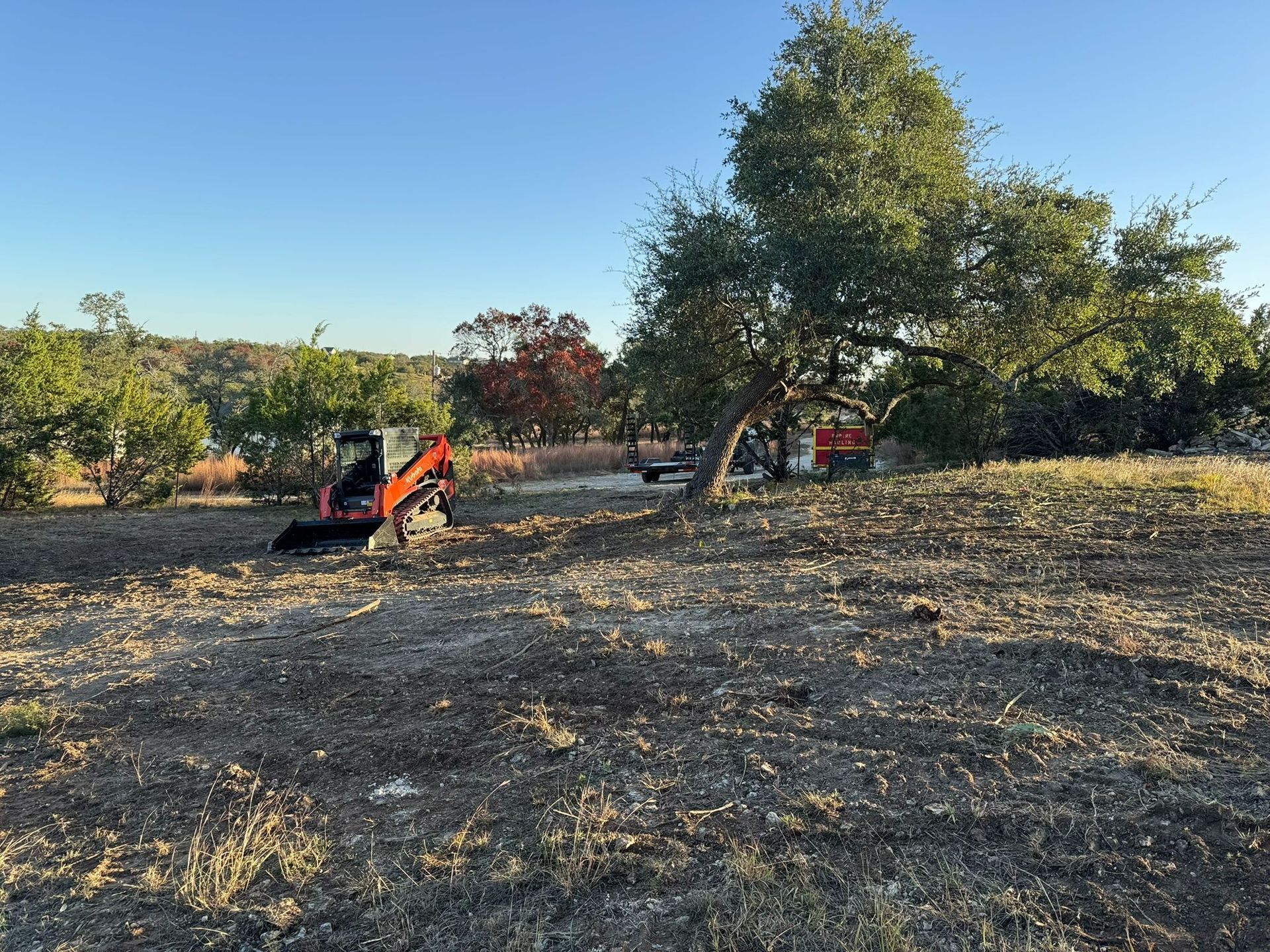
The service involves skid steer operation with bucket attachment to distribute material evenly across designated areas, creating roads that support heavy machinery and pads that prevent soil displacement under repeated vehicle traffic. Gravel spreading also protects underground utilities from surface compaction and establishes drainage paths that prevent water from pooling in low spots during Central Texas downpours.
Schedule a site evaluation to determine material volume requirements and access logistics for your property.
What Happens After Material Is Distributed
Once gravel or crushed stone is spread and graded, construction vehicles no longer sink into soft soil or create rutted tracks that collect standing water. The surface becomes firm enough for delivery trucks to park without ground displacement, and equipment operators can move between work zones without waiting for ground conditions to improve after rain.
Material transport and spreading are included in the service, which means the process covers both delivery coordination and distribution across your site using skid steer equipment. You'll notice the difference immediately when the first utility truck drives onto the newly surfaced road without leaving tire impressions, and when rainwater drains along gravel channels instead of forming mud patches.
Pricing follows a per-yard model, though equipment operation costs fluctuate with fuel prices, which affects overall project estimates in periods of volatile gas markets. The amount of material required depends on the area being covered, the existing soil condition, and whether the surface needs to support light vehicles or heavy construction machinery.
Questions About Material Spreading Work
Property owners preparing development sites or adding access roads typically ask about material types, delivery coordination, and how spreading affects drainage patterns.
What type of material works best for access roads in Austin?
Crushed stone provides better compaction and drainage than rounded gravel, especially in areas with clay soil that retains water, and the angular edges lock together under vehicle weight to resist displacement.
How is material delivery coordinated with spreading?
Material is transported to your site and distributed using skid steer equipment during the same service visit, which reduces staging time and allows construction schedules to proceed without waiting for separate spreading crews.
When should gravel be spread during a development project?
Material spreading happens after initial site clearing and rough grading but before utility installation or foundation work, since access roads need to be in place before heavy equipment arrives.
Why does the Bastrop development zone require access road preparation?
Local development activity has increased material staging requirements, as new construction projects need stable surfaces for contractor access and utility protection before vertical building begins.
What determines how much material a project requires?
The size of the area being covered, the depth of material needed for load-bearing capacity, and the condition of the underlying soil all affect volume calculations and final project costs.
Cut It Out Land Management handles material transport and distribution as part of the spreading service, so your site is ready for the next phase of construction without separate hauling arrangements. Request a material volume estimate based on your access road dimensions and planned vehicle traffic patterns.